
Order: Salientia
Family: Bufonidae (true toads)
Other common names: Colorado River toad
Spanish name: sapo grande
DISTINGUISHING FEATURES
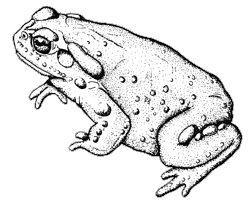
At 7 inches (18 cm) or more this is one of the largest toads native to North America. Adults have a uniformly green to greenish-gray dorsum (topside of the body) and creamy white venter (underside). Large white turbercles, or “warts,”are found at the angle of the jaw, but aside from the large parotoid glands and a few large lumps on the hind legs, this species has relatively smooth skin. Recently metamorphosed toadlets will be tan to green with orange or red spots on the dorsum. Unlike other male toads in our region, male Sonoran Desert toads do not have dark throats; males develop darkened, thick callosities (calluses) on the inside of the thumbs of the forelimbs during the breeding season.
RANGE
Found from Central Arizona to southwestern New Mexico and Sinaloa, Mexico; historically entered southeastern California, though it has not been seen there since the 1970s.
HABITAT
This toad is common in the Sonoran Desert. It occurs in a variety of habitats including creosote bush desertscrub, grasslands up into oak-pine woodlands, and thornscrub and tropical deciduous forest in Mexico.
LIFE HISTORY
Sonoran Desert toads feed upon a variety of insects throughout their lives. Adults eat primarily beetles, although large individuals will occasionally eat small vertebrates including other toads. Sonoran Desert toads are active from late May to September, though principally during the summer rainy season. They are nocturnal during the hot summer months. The male’s call is weak, sounding somewhat like a ferryboat whistle. Eggs are laid in temporary rainpools and permanent ponds. Larvae metamorphose after 6 to 10 weeks. This species lives at least 10 years, and perhaps as many as 20 years.
COMMENTS
Sonoran Desert toads have extremely potent, defensive toxins that are released from several glands (primarily the paratoids) in the skin. Animals that harass this species generally are intoxicated through the mouth, nose, or eyes. Dog owners should be cautious: the toxins are strong enough to kill full grown dogs that pick up or mouth the toads. Symptoms of intoxication are excessive salivation, irregular heartbeat and gait, and pawing at the mouth. If a dog displays any of these symptoms, use a garden hose to rinse its mouth from back to front and consult a veterinarian
© 2006-2009 Arizona-Sonora Desert Museum


No comments:
Post a Comment